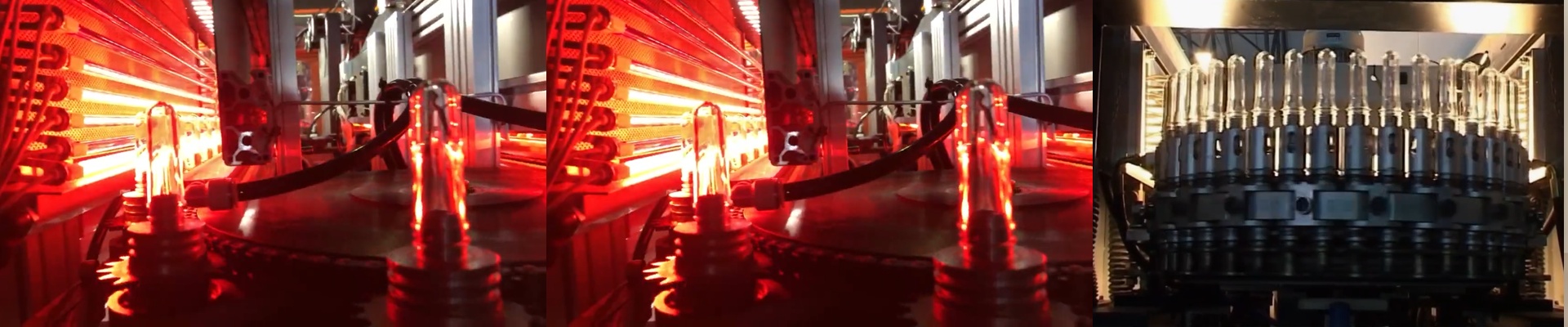
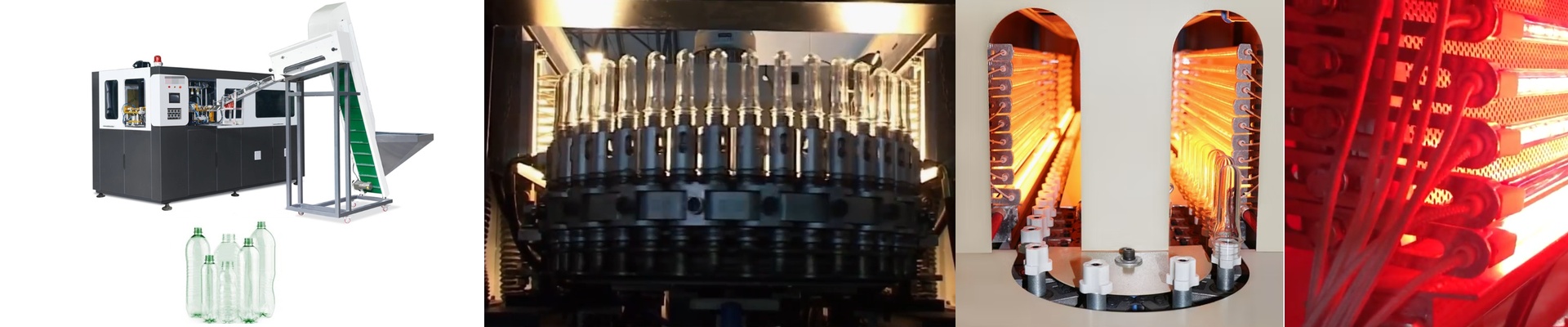
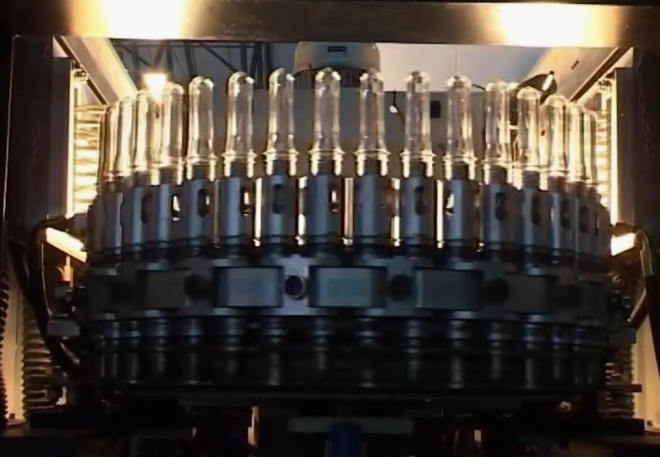
On the floor, the HyPET 120 is humming along on a 12-cavity block when the heating alarm cuts through the noise. Preforms start coming out with uneven wall color, and you can feel the pressure mount. You pull the lamp, take a resistance reading, and the diagnosis lands exactly where it always does: the heater is underperforming. Downtime is measured in minutes, but every minute is thousands of bottles and a mountain of scrap. A replacement heater that merely “fits” isn’t enough. It has to match the HyPET 120’s heating tunnel geometry, the lamp mounting, the wiring, and the thermal behavior the machine was built around. Anything else gives you drift, inconsistent stretch, and an operator chasing settings that never hold.
What matters under the hood
We build the HyPET 120 heater replacement as a direct-fit infrared emitter set, engineered to the original equipment geometry. The core is a short-wave halogen infrared lamp, matched to the preform heating curve PET demands: fast surface heating with controlled throughput so the preform core stays workable. The engineering points are practical, not academic:
- **Lamp type and wavelength:**Short-wave halogen infrared gives you rapid response. That matters because the HyPET 120’s cycle times need fast heat-up and fast cool-down. The lamp output profile is tuned to heat the preform surface efficiently without driving the tunnel temperature too hard.
- **Wattage and voltage:**We match the OEM wattage and voltage for each lamp position. Mismatched wattage shifts heat density across the tunnel, and then you’re chasing hot and cold spots instead of holding stable setpoints.
- **Geometry and mounting:**Lamp length, end-seal type, and bracket fit are 1:1 with the original. If the lamp doesn’t sit the same way in the reflector, the heating pattern changes—and that shows up as streaking and thickness variation on the bottle.
- **Electrical interface:**Connectors and terminals are specified to the machine standard, with solid insulation and proper strain relief. On a blow molder, vibration and heat will work to loosen connections over time; we design against that.
- **Materials and build:**Quartz envelope, high-temperature reflectors, and durable end caps are chosen for repeated thermal cycling. On a 24/7 line, that’s what keeps output consistent and prevents premature lamp failure.
- **QA and traceability:**Every lamp is measured and documented. You get a record of resistance, power, and dimensional checks, so you can verify consistency from batch to batch.
Why it works on the HyPET 120
The HyPET 120 is a high-output stretch blow molding platform, and its heating tunnel is built around a specific thermal balance. When you replace the heater, you want the machine to behave the way it did the day it left the OEM. With the right infrared profile and geometry, you get:
- **Stable preform heating across the block.**The temperature spread across cavities narrows, which cuts one of the biggest drivers of uneven bottle weight and visual defects.
- **Tighter process windows.**When the heater matches the machine, setpoints hold without constant retuning. Fewer alarms, fewer manual interventions, more uptime.
- **Fewer lamp changes.**A properly specified lamp, built with the right materials and tested to the right parameters, lasts longer before output degrades. That reduces spares consumption and maintenance labor.
- **Predictable energy use.**Infrared efficiency depends on matching the emitter to the job. Over-spec lamps waste electricity and heat the machine; under-spec lamps force the operator to raise the tunnel temperature, which also wastes electricity. The right match keeps energy draw in line with the design. This isn’t about chasing headline numbers. It’s about getting the HyPET 120 back to repeatable, measurable performance: consistent bottle weight, stable color, and fewer heating-related stops.
The details that make the difference
A heater replacement is straightforward, but real-world conditions still matter.
- **Confirm the exact lamp spec before ordering.**HyPET 120 configurations can vary by cavity count, package, and year. Verify wattage, voltage, length, connector type, and mounting hardware against your machine label and the existing lamp.
- **Handle lamps properly.**Short-wave infrared lamps are sensitive to oils and surface contamination. Always install with clean gloves and avoid touching the quartz envelope. Contamination creates hot spots and shortens life.
- **Check reflector condition and alignment.**A worn or misaligned reflector changes the heating pattern even with a new lamp. If reflectors are pitted or discolored, replace them at the same time to keep thermal distribution consistent.
- **Control and sensor calibration still matter.**A new heater won’t fix a misreading from a temperature sensor or a drifting controller. After installation, verify tunnel temperatures read correctly and that PID behavior is stable.
- **Thermal expansion is real.**The heating tunnel sees fast temperature swings. Make sure brackets, ceramics, and wiring are torqued correctly and allowed to settle under thermal load before you lock in final checks. We supply the replacement heater as an engineered set, built to the OEM dimensional and electrical baseline, with material choices and inspection steps that match the demands of a running blow molding line. If you want to reduce heating variability, cut unplanned stops, and keep the HyPET 120 running the way it was designed, start by putting a heater in that matches the machine—not just the socket.