

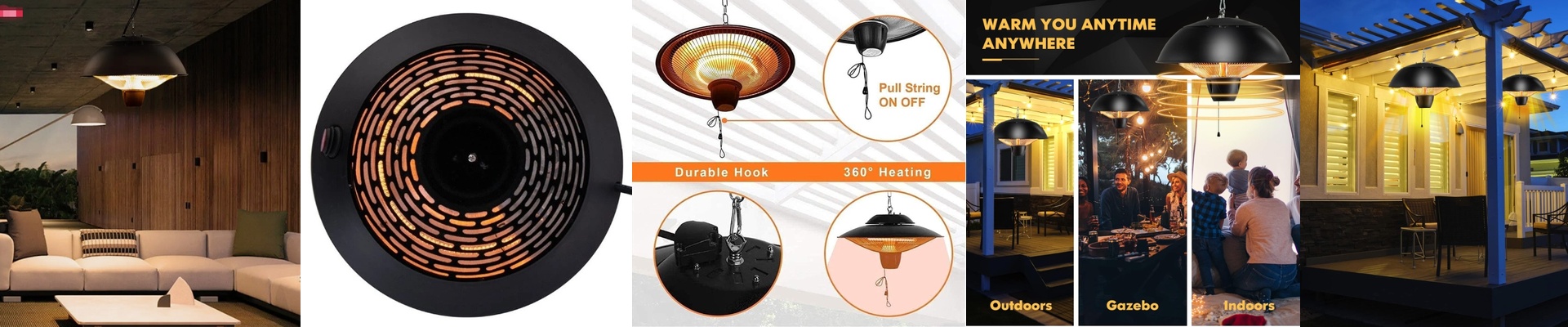


The Quiet Heat Behind the Hanging Patio Heater—Built for Bedrooms
Here’s the truth: we designed this hanging patio heater with one thing in mind—giving you warmth that doesn’t kick you out of sleep. Not just “a heater.” It’s a direct-radiant system, built to run quietly, steadily, in places where the sound level matters as much as the temperature.
Power, voltage, and output—kept simple
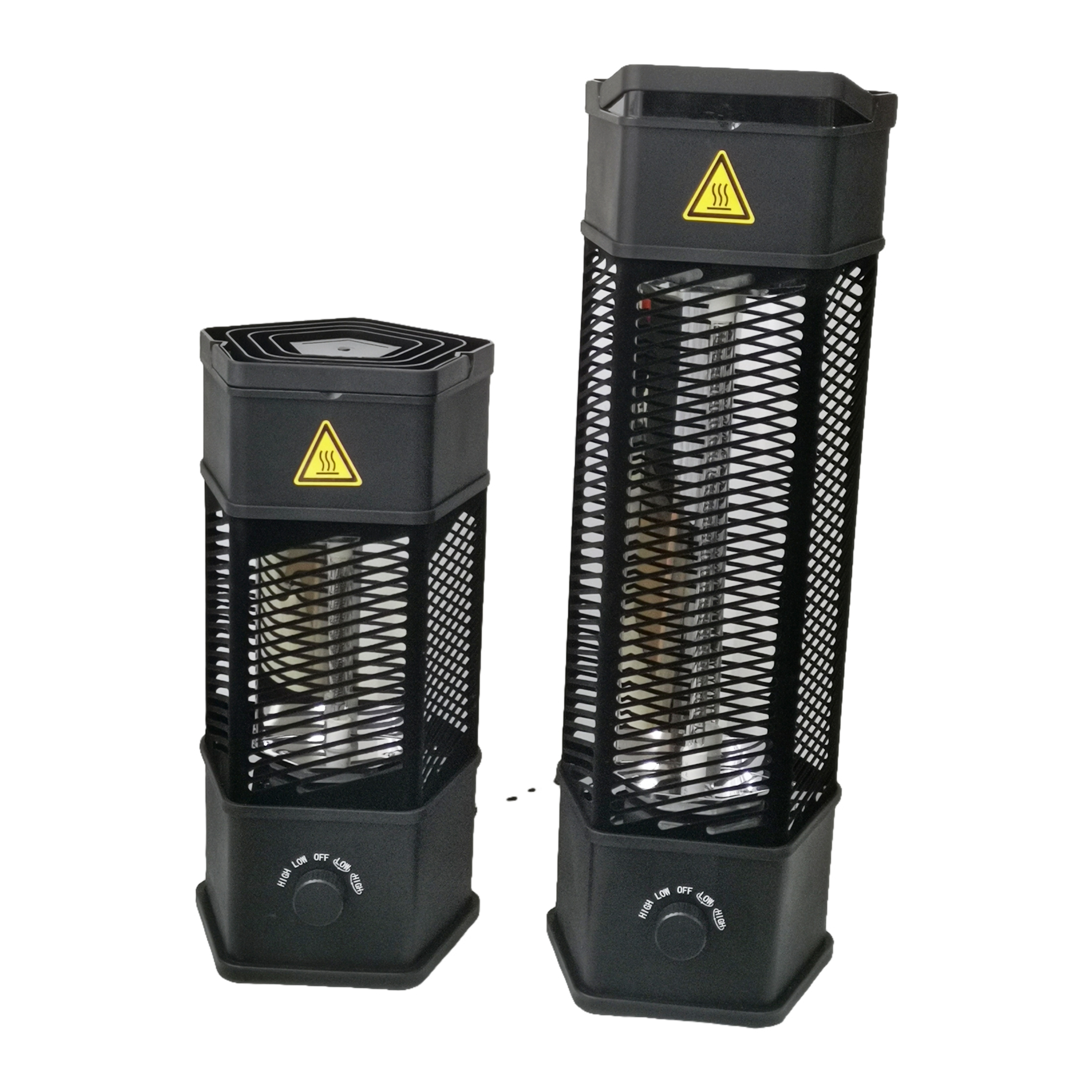
Inside is a high-output infrared tube, made to run on standard mains voltage and deliver heat that feels immediate. No waiting around. The whole idea is to put the warmth where you actually feel it—on you and the surfaces around you—without trying to heat the entire room’s air. And that’s exactly why it stays quiet. No forced-air fan. Just the basics: the filament heats up, the quartz envelope lets the infrared energy through, and the reflector aims it where you need it. The electrical side is engineered to keep current draw predictable, so the wiring and controls stay well within safe limits.
Materials and design—chosen for the long haul
We use a halogen-filled quartz tube because it can take the heat—again and again—without giving up. The halogen cycle helps keep the filament stable by returning evaporated material back where it belongs. That’s what supports consistent output over the life of the tube. Quartz is the right choice for another reason, too: it transmits infrared energy well and doesn’t freak out when temperatures change fast. For the connection, we went with an R7s connector. It gives solid contact and a secure mechanical lock, so the tube stays put—even when the unit is mounted and life happens. The reflector is shaped to focus the beam, so you waste less light and get more usable heat where you aim it.
Why this fits the bedroom so well
Forced-air systems in a bedroom tend to bring two problems: airflow noise and dry air. This infrared heater sidesteps both by radiating heat directly. The result? Localized warmth that doesn’t rely on a blower. It runs essentially silent—just the quiet, steady presence of the heated tube. Now, there is a trade-off, and it’s honest: directivity. This unit shines when it’s aimed at the spot where you sleep. It’s not designed to warm the whole room’s air the way a convection system does. So mount height and aim matter. But when you size it right and position it with intention, you get clean, quiet heat that supports sleep—without the mechanical noise, without the drafts.