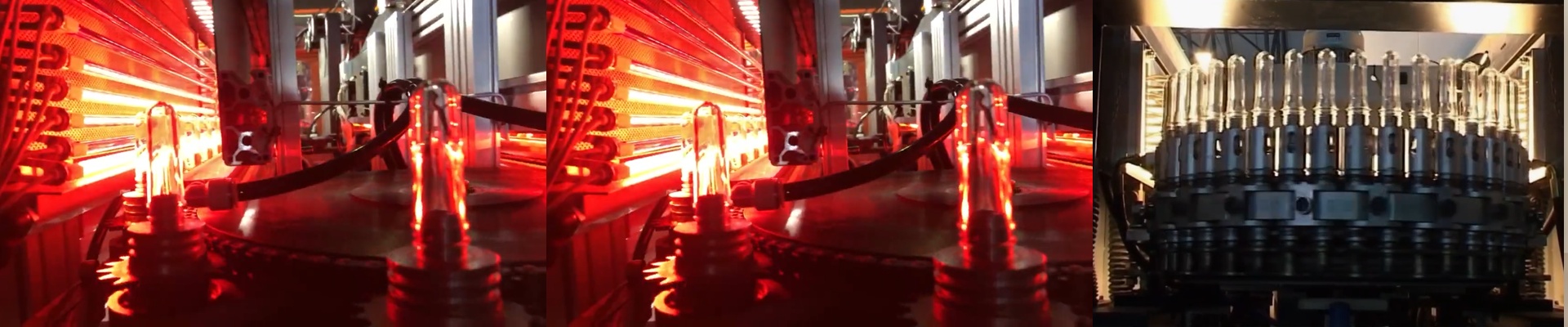
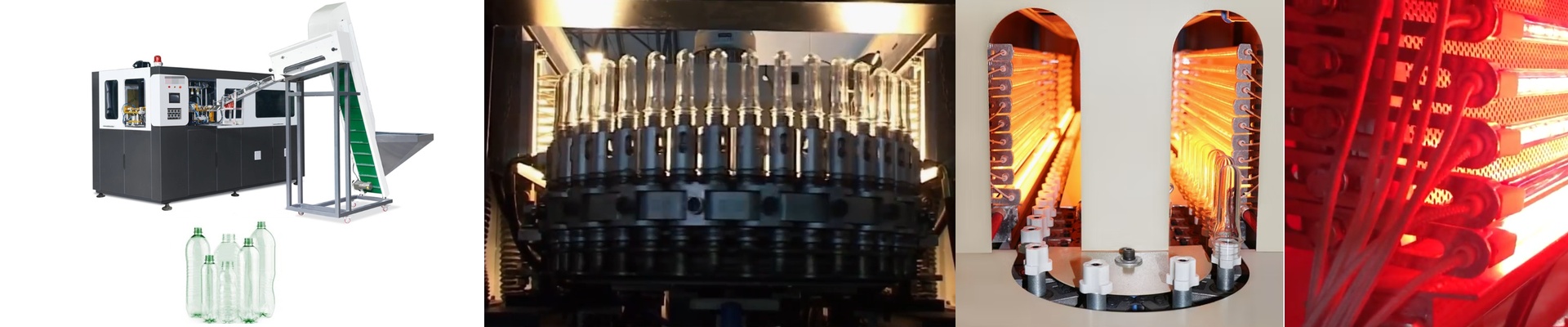
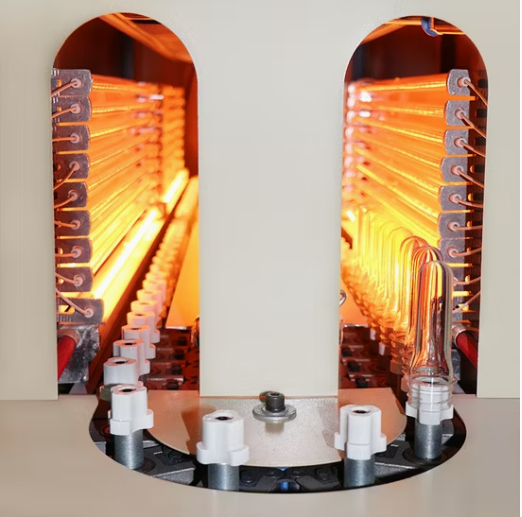
On a PET stretch blow molder, uptime is the only scoreboard that matters. When the heating tunnel starts to drift, preforms don’t get the stretch ratio they need. You start seeing rejects, cycles drag, and the line stalls while you chase lamp faults. If your halogen quartz emitters are fading, cracking, or just losing repeatability, you’re paying for it—in scrap, in energy, and in emergency maintenance calls. What actually matters under the hood We build a direct-fit infrared emitter as a quartz sleeve, designed for the preform heating tunnel on blow molding machines. The quartz envelope gives you stable output and fast response, with high transmission in the short-wave band that matches PET’s absorption profile. The specs are chosen for machines that run for a living: standard voltages (120/230/240V), watt densities tuned to the tunnel zone, and geometry that drops into OEM lamp holders. Many run 5,000+ hours with minimal output drift, and the R7s connector keeps swap-outs quick. Here’s the thing about consistent heating: on Sidel, Krones, SIPA, Husky, SACMI, and Nissei ASB machines, it’s the difference between a clean bottle and walls that blister. These quartz sleeves put the heating profile back where it should be, so you get tighter temperature uniformity across preforms, fewer jams, and stretch behavior you can count on. The payoff is fewer line stops, less scrap, and a steadier cadence. Energy use comes down because the emitter comes up fast and holds setpoint without overshoot. Installation is straightforward, but the heating tunnel is a harsh place. Double-check length, wattage, and terminal type against your blow molder’s OEM spec—get that wrong and you’ll see contact issues and uneven heating. Handle the quartz with clean gloves; oils and contamination will create hot spots. And if your line runs heavy color loads or very thin walls, tell us up front. We can adjust the spectral output and power density to keep the profile stable.