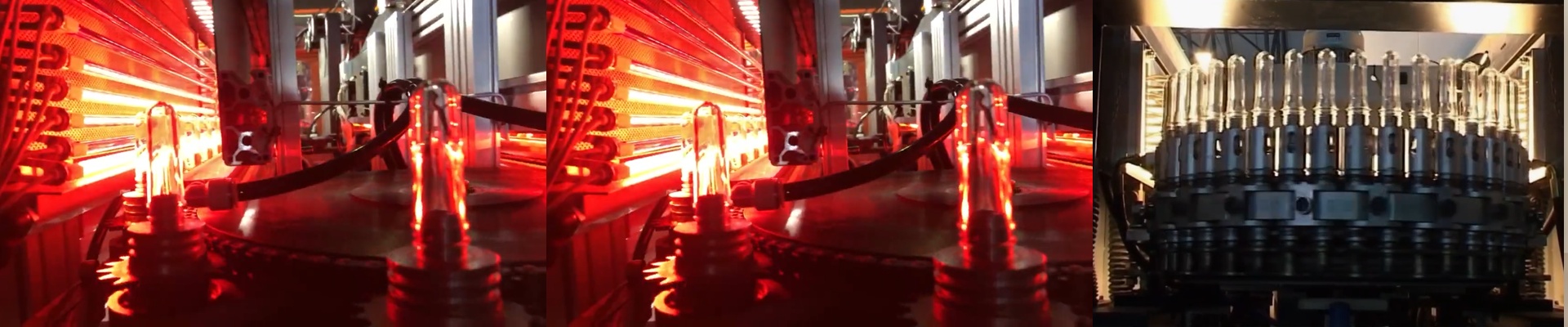
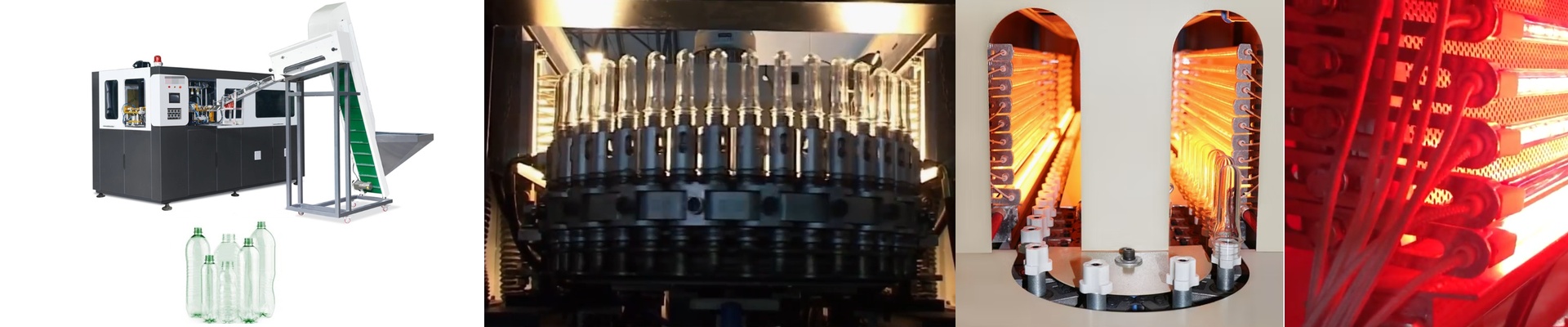
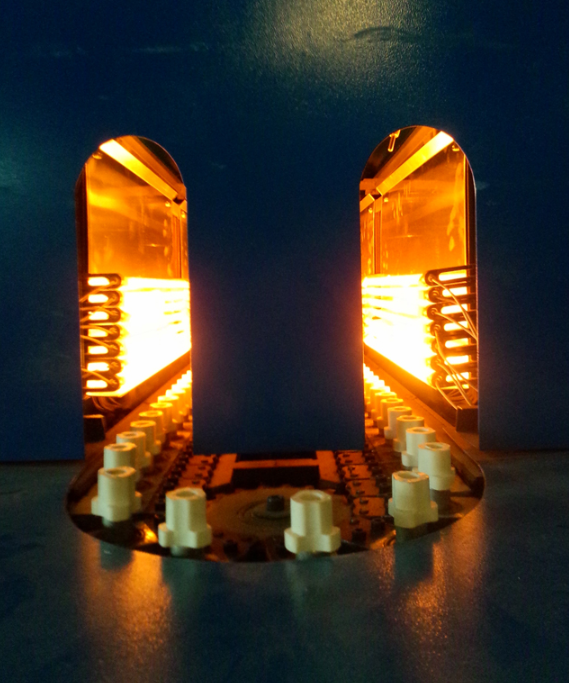
On a Krones aseptic PET line, the heating tunnel is where the day’s schedule gets made or lost. Preforms have to come up to temperature fast and even, or you’re instantly chasing thin walls, uneven stretch, and fill problems that shut the line down. When the heating tube can’t deliver, you see it in scrap, in power draw, and in the overtime it takes to keep the blow molder honest. We built the Krones Pet Aseptic blower heating tube as a direct-fit, engineered replacement for Krones aseptic blow molding machines. It’s an infrared emitter designed to match the original OEM thermal profile, mechanical footprint, and electrical interface—so the heating zone behaves the way the machine was intended to run.
What matters, technically
This tube is a medium-wave infrared emitter. Medium-wave works because PET absorbs it efficiently without the surface overshooting. The payoff is quicker ramp-up and tighter control across the preform wall. We target the specs that Krones aseptic blowers expect:
- Power and voltage: sized to the original blower heating tube rating, so the control system sees the load it was designed for.
- Heating element type: medium-wave infrared, for fast response and predictable temperature distribution.
- Connector: engineered to the correct interface, so it lands on the existing terminals without fuss.
- Dimensions and mounting: matched to the original tube footprint and bracketing, so you don’t have to rework the heating tunnel.
- Quartz construction: chosen for high thermal shock resistance and stable output in high-cycle duty. None of that is decoration. It’s what keeps the heating zone repeatable shift after shift.
Why it fits the process
Krones aseptic blow molders are built around a repeatable thermal process. If the heating tube drifts, the whole process drifts with it. With this tube, you get:
- Tighter temperature control across the preform, which keeps stretch and wall thickness consistent in aseptic bottle production.
- Faster stabilization after startup, cutting warm-up scrap and shortening changeover.
- Energy use that stays in line with the machine’s design, because the emitter matches the intended electrical and thermal load.
- Longer service intervals, since the quartz tube and internal element are built for the punishing cycle count of a blow molder heating tunnel. On an aseptic line, consistency isn’t just about output—it’s about staying inside the sterility envelope. A stable heating profile keeps the downstream fill and seal process in control.
The shop-floor details you can’t skip
Installation is straightforward on Krones aseptic blowers, but there are a few real-world points to plan for.
- Compatibility verification: match the part number to your machine’s serial and the heating tunnel configuration. Some lines run zone-specific wattages and lengths.
- Reflectors matter: the tube performs as designed only when the reflector is clean, intact, and aligned. Fouling or warping changes heat distribution fast.
- Thermal management: keep airflow and cooling around the terminals intact. Overheated connections kill component life, even when the tube itself is fine.
- Handling: quartz is tough, but brittle. Use clean gloves, keep oils off, and don’t twist or torque the tube during mounting. If you want the cycle time, quality, and uptime the machine is capable of, stick to the spec, keep the reflector in shape, and treat the terminals as part of the thermal system. We supply the Krones Pet Aseptic blower heating tube as a spec-to-spec, plant-floor replacement—so the aseptic line keeps running the way it was engineered to run.